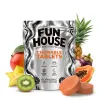
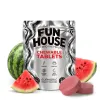
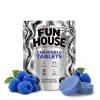
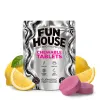
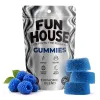
You've found a Kanna gummy that looks interesting. The flavor sounds good, the package says “botanical,” and you're ready to check one more detail: is it vegan?
Some Kanna gummies may be vegan, but the plant ingredient doesn't establish the status of the finished product. You need to check the complete formula, especially the gelling agent and any other animal-derived ingredients. A leaf on the package isn't the same as a clear answer.
Start with the gummy, not just the Kanna
Kanna comes from Sceletium tortuosum, a plant. A gummy, however, is a finished recipe. Its base, sweeteners, colors, flavors, coatings, and other ingredients all belong in the assessment.
The Vegan Society describes a vegan diet as excluding products derived wholly or partly from animals. Under that approach, a plant-based active ingredient doesn't cancel out an animal-derived ingredient elsewhere in the formula.
This is why “contains plants,” “vegetarian,” and “vegan” shouldn't be treated as interchangeable descriptions. If your preference is specifically vegan, look for information that addresses that question directly.
Pectin and gelatin aren't the same
One of the first ingredients to check is the gelling agent. Gelatin is animal-derived, so a gummy containing it isn't compatible with a vegan diet.
Pectin is different. U.S. food regulations describe pectins as plant polysaccharides and explain that commercial pectin can be extracted from citrus peel, apple pomace, or beet pulp. It is a plant-derived ingredient used for functions including thickening and stabilization.
A pectin-based gummy can therefore be compatible with a vegan formulation. But “made with pectin” doesn't finish the check. You still need to read the other ingredients and any relevant information from the manufacturer.
Check the rest of the recipe
Honey and dairy ingredients are straightforward examples of ingredients that don't fit a vegan diet. Other ingredient names may be less familiar or may not reveal their source clearly.
You don't need to memorize a long list of additives to shop carefully. When a label leaves a source unclear, ask the manufacturer whether the specific finished product contains animal-derived ingredients or uses animal-derived processing aids.
Keep the question product-specific. A company may sell more than one recipe, and different flavors or product lines may have different formulations. A statement about one gummy doesn't automatically cover another.
What a vegan claim can tell you
A clear manufacturer statement or a verifiable certification can help answer the question. If the package displays a certification mark, check who issued it and whether the exact product is included.
Certification programs have their own standards and verification processes. An unexplained symbol or a decorative leaf shouldn't be treated as equivalent to a confirmed certification.
If there is no certification, that doesn't automatically make a product non-vegan. It means you may need clearer ingredient and manufacturing information to decide whether it meets your preferences.
Vegan doesn't mean allergen-free
Vegan status and allergen safety are different questions. A vegan product can contain ingredients that trigger an allergy, and shared manufacturing facilities may require separate clarification.
Read allergen statements as well as the ingredients. If you have a diagnosed allergy, ask questions specific to that allergy rather than treating “vegan” as reassurance. A clinician can help you decide what information you need.
The same distinction applies to “sugar-free,” “organic,” or “gluten-free.” Each describes a different property. None follows automatically from vegan status.
And vegan doesn't settle the Kanna questions
A formula can meet vegan preferences without being suitable for every person. Its active ingredients, medication interactions, warnings, and serving information still matter.
A pectin base doesn't establish a lower-strength product, a gentler experience, or suitability for daily use. Those are separate questions about the finished formulation and its evidence.
If you're deciding between formats, explore tablets, gummies, and powder. If you take medication, start with our interaction guide and a conversation with a pharmacist or clinician.
A quick label check
- Read the complete ingredient list for the exact product and flavor.
- Identify the gelling agent.
- Check for other animal-derived ingredients.
- Verify a certification rather than assuming a symbol proves one.
- Ask about unclear ingredient sources or manufacturing details.
- Review allergens, warnings, and active ingredients separately.
Clear answers beat assumptions. You can choose a format you enjoy while keeping your dietary preferences and safety questions distinct.
Common questions
Are all Kanna gummies vegan?
No. The botanical ingredient alone doesn't tell you whether the finished gummy contains animal-derived ingredients.
Does pectin prove the whole product is vegan?
No. Pectin is plant-derived, but the rest of the formula and relevant manufacturing information still need checking.
Is a vegan gummy automatically safer?
No. Vegan status doesn't establish safety, medication compatibility, or an absence of allergens.