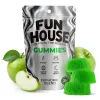
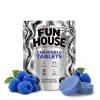
If you've been reading about Kanna, you've probably seen a whole collection of descriptions: calm, focused, social, uplifting. The obvious next question is more personal. What would it actually feel like for you?
The honest answer is that current research can't predict your experience. Small studies of a specific Kanna extract have found changes in certain brain responses and cognitive test results. Those findings don't establish one recognizable feeling that everyone will have, or a guaranteed effect from a gummy or tablet.
Start with the difference between a feeling and a finding
A feeling is something a person notices and describes. A research finding may be a change in a test score, a brain-imaging signal, or a recorded symptom. These can relate to each other, but they aren't interchangeable.
For example, a person saying “I felt more comfortable talking” is describing an experience. A scanner showing a different response to fearful faces is measuring a specific biological response during a task. The second doesn't prove the first will happen at dinner with friends.
That distinction helps you read Kanna claims without dismissing the research or expecting more from it than it can support.
What the brain-imaging study found
Terburg and colleagues studied a standardized extract called Zembrin in 16 healthy participants. The participants took part in controlled tasks while researchers measured brain activity. The experiment found reduced amygdala responses to fearful faces in a particular low-load task condition and changes in connectivity with the hypothalamus.
The amygdala is involved in responding to emotionally relevant information, including threats. It's easy to see why those findings attracted interest. But the researchers also stated that they did not observe a general subjective mood effect.
In other words, this wasn't a study showing that everyone felt happier, became more outgoing, or had a particular kind of evening. It was a small experiment that helped identify questions for further research.
What about focus?
A 2014 pilot study enrolled 21 healthy middle-aged adults and tested the same branded extract. It reported improvements in certain measures of executive function and cognitive flexibility. Those terms concern aspects of planning, controlling attention, and adjusting to changing task demands.
Not every cognitive measure improved significantly. The study was small, treatment periods were short, and some participants dropped out. A promising result on selected tests isn't a broad guarantee of productivity, creativity, or better conversations.
It's also not a reason to use a supplement to treat persistent concentration problems. Those deserve their own conversation with a healthcare professional.
Why online descriptions don't settle the question
Posts and reviews usually leave out information a controlled study would need: the full formulation, what else someone used, their health circumstances, and a meaningful comparison. They may describe a real experience without explaining what caused it.
Multi-ingredient products make that especially important. If a product includes caffeine or another active ingredient, a review doesn't isolate Kanna's contribution. Different extracts also aren't automatically equivalent just because their labels use the same plant name.
Even enthusiastic, genuine reviews can't replace product-specific evidence. Treat them as individual accounts rather than forecasts.
Does Kanna get you high?
The word “high” means different things to different people. Someone may use it to mean intoxication, a noticeable mood change, euphoria, or simply feeling different. A yes-or-no slogan can hide that ambiguity.
Kanna isn't cannabis, and the cited studies don't establish a cannabis-like experience. They also don't prove that every Kanna product leaves judgment or alertness unaffected. Neither “just like THC” nor “you won't feel anything” is a conclusion you can draw from these papers.
Don't assume you're fit to drive or operate equipment because a product is plant-derived or marketed for social settings.
A clearer set of expectations
Start with the actual product rather than a list of hoped-for feelings. Read its full ingredients, warnings, and serving information. Check whether evidence concerns that formulation or something different. If you take medication, review it with a pharmacist or clinician before considering Kanna.
A particular onset time, duration, or guaranteed mood change can't be responsibly predicted from the plant name alone. If a product's instructions are unclear, ask for clarification rather than guessing or taking more.
For related questions, explore Kanna side effects and our medication interaction guide.
Common questions
Will Kanna make me more social?
The cited research doesn't establish a reliable improvement in social confidence from a finished Kanna product. Social marketing isn't the same as a measured clinical outcome.
Can a study tell me how my gummy will feel?
Not unless the evidence actually applies to that formulation—and even then, individual responses can differ. The small extract studies cited here don't predict the effects of an unspecified gummy.
Is a subtle experience proof that something is safe?
No. What you notice doesn't reveal every possible interaction or unwanted effect.
References
- Terburg et al. (2013). Acute Effects of Sceletium tortuosum (Zembrin), a Dual 5-HT Reuptake and PDE4 Inhibitor, in the Human Amygdala and its Connection to the Hypothalamus.
- Chiu et al. (2014). Proof-of-Concept Randomized Controlled Study of Cognition Effects of the Proprietary Extract Sceletium tortuosum (Zembrin) Targeting Phosphodiesterase-4 in Cognitively Healthy Subjects.